For a long time, the basic dream of a rock band was simple: write strong songs, rehearse hard, play live, get noticed, and eventually find people who could handle the rest. A label, a manager, a booking agent, a photographer, a PR person, maybe even someone who understood radio and press. The band could focus on the music, while the industry built the story around it.
That version still exists, but for most independent rock bands it is no longer the starting point. Today, a band without a label is not only a musical project. It is also a small media project. The songs matter, but so do rehearsal clips, live fragments, short videos, photos, newsletters, captions, playlists, behind-the-scenes posts, and the basic ability to explain why anyone should care. This does not mean every musician must become an influencer. It means the band has to understand that attention is now part of the work.
The band is no longer only the sound
A modern independent band cannot rely only on finished tracks. The audience often meets the band before hearing a full song. Someone sees a rehearsal video, a short clip from a tiny stage, a funny studio mistake, a guitar tone demo, a tour van moment, or a raw vocal take recorded on a phone. That first contact may be more important than the official release.
This is uncomfortable for many rock musicians, especially those who want the music to speak for itself. But in a crowded digital environment, music rarely gets that chance without context. A track appears among thousands of other tracks. A band name means nothing until there is a mood, a face, a scene, a reason to click.
That is why the media side of a band should not be treated as a fake layer added after the real work. It is part of how the audience enters the world of the band.
Someone must own the camera
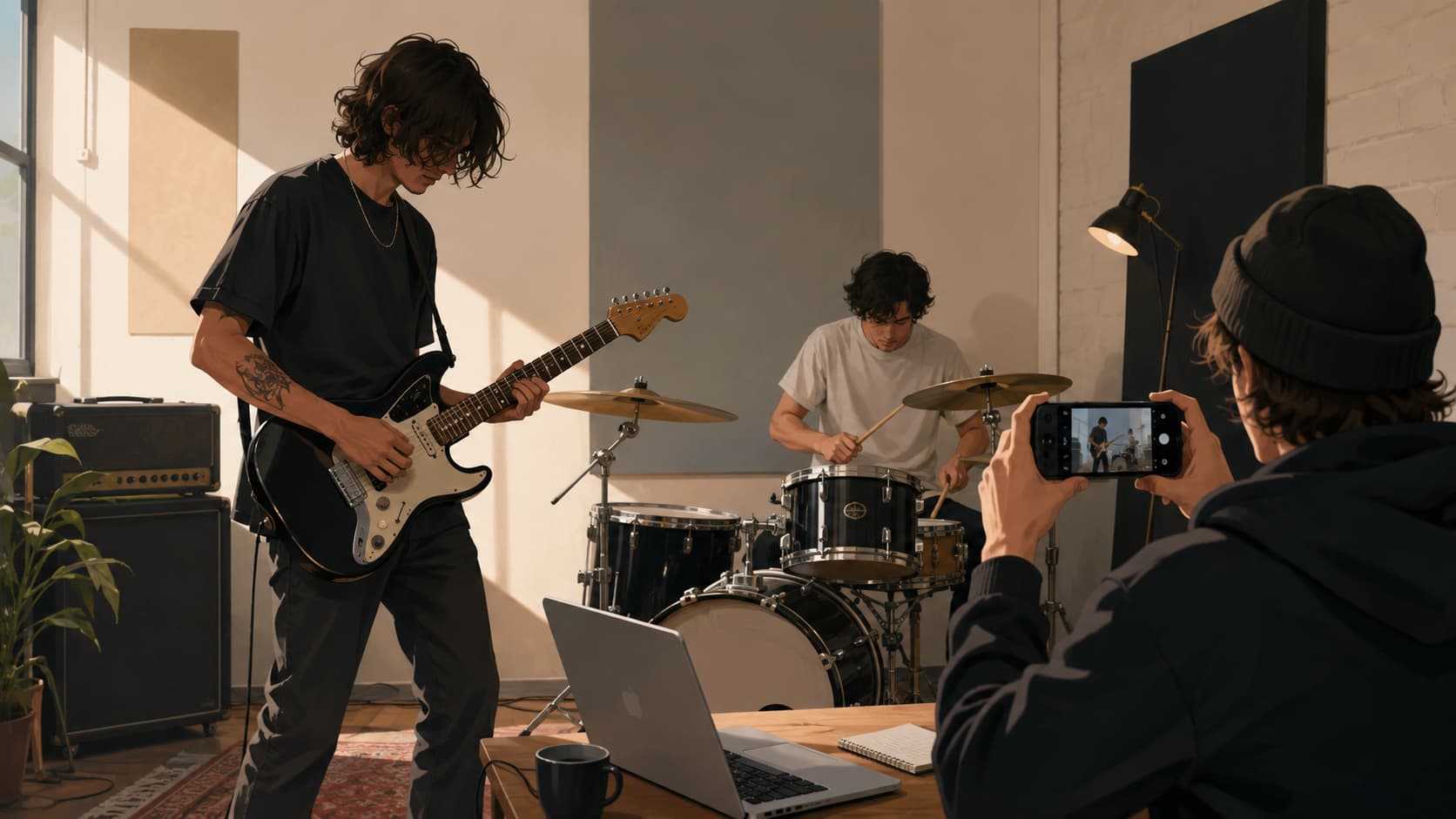
The first practical question is simple: who films? Many bands avoid this because nobody wants to be “the content person.” But if nobody is responsible, nothing gets captured. The best moments disappear: the first time a new riff works, the strange silence before a show, the broken cable panic, the crowd singing one line, the drummer laughing after a failed take.
A band does not need a professional videographer at the start. It needs one person who remembers to record. This can rotate, but it should not be random. One member can film rehearsals this week, another can film the show, another can capture backstage details. The goal is not constant recording. The goal is to collect honest material that shows the band alive.
Phone video is enough if the sound is not painful, the image is stable, and the moment has energy. A perfect video of a boring moment is less useful than a rough video that reveals personality.
Writing is not only press releases
Independent bands often think writing means official announcements: “Our new single is out now.” That sentence is useful, but it is not a story. Writing for a band means explaining the small details around the music: what the song is about, why the arrangement changed, what went wrong in the studio, what the band learned from the last show, why a certain guitar sound matters, or why the lyrics took six months to finish.
Not every post needs to be emotional or deep. Some can be simple and direct. But the band should have one person who can turn everyday moments into readable language. This person does not need to be a professional copywriter. They need taste, clarity, and the ability to sound human.
The worst band captions usually feel like templates. The best ones sound like someone from the group is actually speaking. Fans do not need corporate polish from a small rock band. They need a reason to feel close to the process.
Promotion should not be dumped on the loudest member
In many bands, promotion falls to the most extroverted person. That may work for a while, but it can also create resentment. One member becomes the unofficial manager, designer, social media editor, photographer, and booking assistant while everyone else “just plays.” This is one of the fastest ways to burn out a DIY band.
Promotion should be treated like rehearsal: shared, scheduled, and respected. One person may be better at posting. Another may be better at talking to venues. Another may know how to edit clips. Another may be good at writing emails. The point is not that everyone does the same work. The point is that everyone understands the media side is real labor.
A band without a label must divide invisible work clearly. Otherwise, the group may have good songs but no sustainable system around them.
What should a small band actually publish?
The mistake is thinking every post must sell something. If a band only appears when it wants streams, tickets, or merch sales, the relationship with the audience becomes thin. People need to see more than announcements.
A useful content mix can include rehearsal fragments, short live clips, gear details, lyric notes, studio mistakes, local scene recommendations, photos from small venues, band member playlists, writing updates, and honest reflections after shows. The key is rhythm. A band that posts once every three months and then uploads ten desperate release reminders will feel disconnected.
Short video is especially useful because it allows people to feel energy quickly. But long-form material still matters too. A good blog post, newsletter, interview, or album note can give depth that short clips cannot.
The media project must fit the band’s identity
Not every rock band should behave the same online. A noisy punk band, a dark post-punk project, a garage rock trio, and a progressive metal group should not use identical content. The media style should match the music.
A rough band can use rougher visuals. A mysterious band can post less, but more intentionally. A technical band may show playing details and gear breakdowns. A lyric-driven band can share fragments of notebooks or the story behind a song. The aim is not to copy whatever is trending. The aim is to make the online presence feel like an extension of the sound.
If the content feels disconnected from the music, the audience notices. A band does not need to be polished. It needs to be coherent.
A label is no longer the beginning of visibility
For independent rock musicians, this is both good and exhausting. The good part is that a band can build an audience without waiting for permission. The exhausting part is that the band must do more than write songs. It must document, explain, publish, respond, organize, and keep showing signs of life.
Still, this does not have to destroy the music. Done badly, media work becomes a distraction. Done well, it becomes part of the band’s identity. It captures the messy process behind the songs and gives listeners something to follow between releases.
A rock band without a label does not need to become a content factory. But it does need to become visible. Someone has to film. Someone has to write. Someone has to promote. And if the band wants to stay independent, those roles cannot remain accidental forever.
The modern DIY rock band is not just a group of people in a room with instruments. It is a sound, a story, a visual language, and a small media machine built by the same people who carry the amps.